
CARPET BEETLES
EXTERMINATOR
CARPET BEETLES
EXPERTS
When it comes to carpet beetles, nothing is certain, because they will spare nothing. They are voraciously hungry insects and consider everything as a source of food.
Extermination of carpet beetles is suggested, as these insects are voracious and will feast on your carpet fibers, wool fabrics, pet food scraps, leather and other dead insects. This is just a sample of the list of things they like.
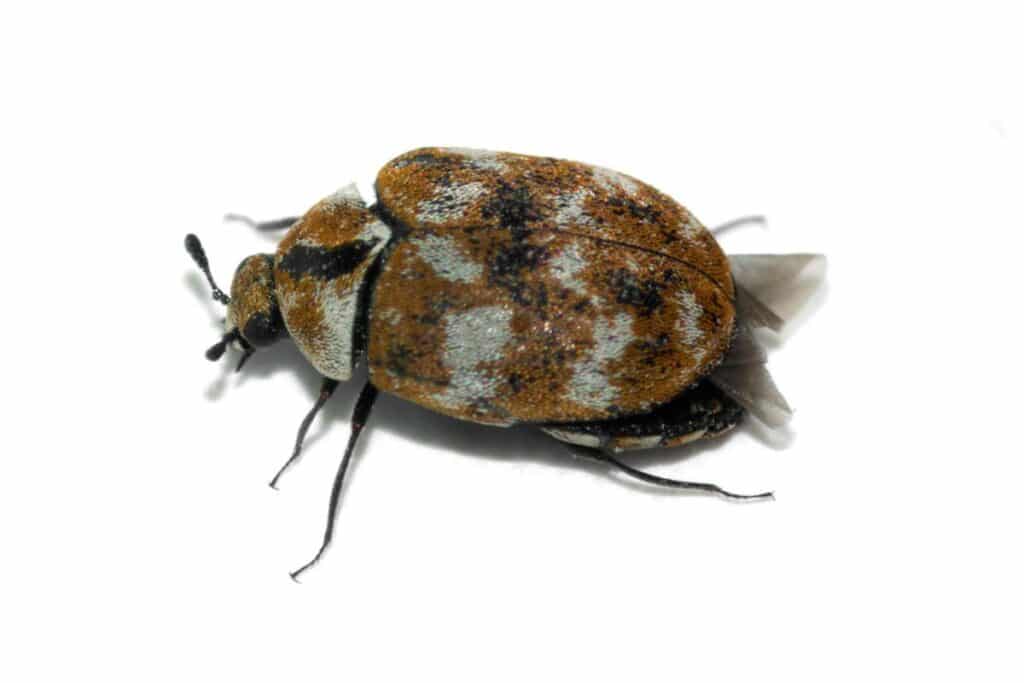
The carpet beetles are small and round. Their color varies from gray-brown to black and they can sometimes have various patterns, such as white or orange lines on their back. They are similar in size and shape to a ladybug, about 1/5 of an inch in length.
DO NOT WAIT
MORE!
CONTACT US
NOW
FOR YOUR
EXTERMINATOR.
PLAN A
VISIT
TODAY
WE RESPOND TO
FREQUENTLY ASKED QUESTIONS
ON THE CARPET BEETLES
ALL ABOUT CARPET BEETLES
How do you know if you have carpet beetles?
To know if you have beetles in your home, there are several signs to look for.
1. Insect observation: Adult beetles are small flying insects that are about 2-4 mm long. They have a rounded body and a variable coloration, usually black with white, yellow or gray spots on the back. The larvae are small brown hairy worms.
2. Damage to textiles: Beetles, especially the larvae, feed on natural fibers. If you see holes, abnormal wear or discoloured areas on your carpets, rugs, woollen clothing, furs, or even leather-bound books, this is a possible sign of infestation.
3. Debris: Beetle larvae leave debris similar to small balls of wool or fiber. This debris can often be found near damaged areas.
4. Allergic reactions: Beetle larvae hairs may cause allergic reactions in some individuals. If you or a family member has allergy symptoms with no apparent cause, it could be due to a beetle infestation.
If you see one or more of these signs, it is likely that you have beetles in your home. In this case, it is recommended to act quickly to eliminate these pests and protect your textiles.
How to get rid of carpet beetles?
To get rid of carpet beetles, a combination of cleaning, treatment and prevention is necessary.
1. Cleaning: Start by vacuuming your carpets and rugs, focusing on the less frequented areas where beetles like to hide, such as under furniture. Vacuuming should be done regularly and carefully, taking care to empty the vacuum bag outside to avoid re-infestation. Carpets can also be steam cleaned, which kills eggs and larvae.
2. Treatment: The use of insecticides may be considered to control beetles. There are commercially available aerosols, fumigants or powders made from pyrethrum, a natural insecticide. For a more important infestation, the intervention of a professional may be necessary. He will be able to use more powerful products and guarantee an effective elimination of these pests.
3. Prevention: To avoid re-infestation, it is important to maintain good hygiene of your carpets and textiles. Store your off-season clothing in waterproof covers. Avoid accumulating old fabrics and clean regularly, especially in dark, low-traffic areas. In addition, you can use pheromone traps to attract and trap adult beetles.
Getting rid of beetles can take some time and effort, but by taking these steps, you can enjoy your carpets again without these unwanted visitors.
Where do the beetles lay their eggs?
Beetles, like most insects, lay their eggs in places that are suitable for the survival and growth of their larvae. For the beetle, these locations are usually associated with food sources for the larvae that will develop from the eggs.
1. Textiles: Beetles are particularly attracted to natural fibers. For example, they often lay their eggs in carpets, rugs, woollen clothing, furs and upholstery.
2. Nests: Beetles may also lay their eggs in the nests of birds, rodents or wasps, where they will find feathers, hair or other organic material to consume.
3. Dark nooks and crannies: Beetles prefer dark, quiet places to lay their eggs. So you might find them in cracks, baseboards, behind furniture, or other low-traffic areas of your home.
In short, beetles are opportunistic and can lay their eggs in a variety of locations, provided there is a nearby food source for the larvae. If you suspect a beetle infestation, these would be the first areas to inspect.
Are beetles dangerous?
Anthrenes, as such, are not hazardous to human health. They are not known to transmit diseases and their bites are not harmful. However, they can cause several inconveniences.
Property Damage: Beetle larvae feed on natural fibers and can cause significant damage to your textiles, including carpets, clothing, curtains, bedding and upholstery. They can also attack other items containing animal products, such as leather-bound books or insect collections.
Allergies: Some people may have an allergic reaction to the hair of beetle larvae. These reactions may include rashes, hives, redness or itching.
Infestation: An infestation of beetles can be disruptive and stressful. In addition, their removal can take time, effort and sometimes professional intervention, which can result in costs.
In summary, although beetles are not dangerous in the strict sense, they can cause significant problems and it is best to prevent their appearance or to treat any infestation quickly.
Why do I have beetles?
If you discover beetles in your home, there are several factors that may explain their presence.
1. Access to food: Beetles are attracted to natural fibers, which are the main food of their larvae. They may be attracted to rugs, woollen clothing, furs, upholstered furniture, and even leather-bound books. If you store food in unsecured conditions, it can also attract these pests.
2. Entering the house: Beetles can enter your house in several ways. They can fly through open windows or doors, or be carried indoors on infested pets, clothing or objects.
3. Suitable environment: Beetles prefer dark, quiet, undisturbed environments for breeding. Closets, attics, basements and areas behind furniture can provide ideal conditions for these insects.
4. Animal nests: If you have bird, rodent or wasp nests near your home, they may attract beetles looking for a place to lay their eggs.
In sum, the presence of beetles is usually due to a combination of factors, including access to food, an environment conducive to their reproduction and a way for them to enter the house.

| Name | CARPET BEETLES |
|---|---|
| Class | Insects |
| French name | Varied Carpet Beetle |
| Latin name | Anthrenus verbasci |
| Length | 1.7 to 3.5 mm (Larva: 4 to 5 mm long) |
| Color | brown |
| Life | 60 to 325 days |