Wildlife removal
exterminator.
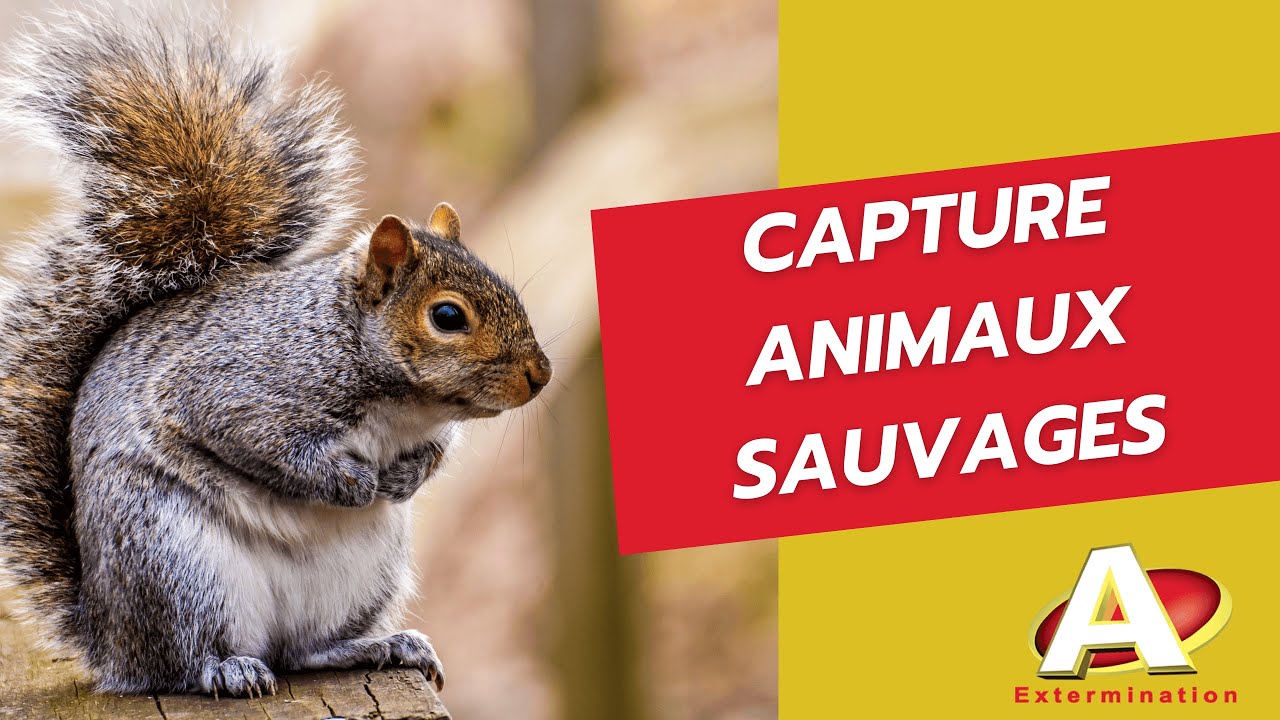
A Extermination’s team are wildlife removal professionals: they know animal habits well, where animals settle and how to get them out. The skunk and the raccoon are the main carriers of raccoon rabies, which returned to Quebec in December 2024. That’s why it’s wise to be careful and call professional exterminators to handle it safely.
At A Extermination, capture is done in line with Quebec regulations, then we seal the access points so the animal doesn’t come back.
Our method · wildlife removal
ESTIMATE
- In business since
- 1994
- Response
- Fast· day and night
- Written guarantee
- 12months
- Availability
- 24/7· emergencies
Why not capture
the animal yourself
Capturing wild animals is a complex task that requires specialized knowledge, technical skills and proper experience. Wild animals can be unpredictable and react aggressively when they feel threatened.
Risks to your safety
Raccoons, skunks, squirrels, opossums, groundhogs and bats. Capturing a wild animal can lead to serious injuries such as bites, scratches or blows.
Disease transmission
Wild animals can carry various diseases, including parasites, viruses or bacteria, that can be passed on to people. The skunk and the raccoon are the main carriers of raccoon rabies, and bats can carry rabies anywhere in Quebec.
Legality and ethics
Capturing a nuisance animal is governed by Quebec’s Act respecting the conservation and development of wildlife. Moving raccoons, skunks, foxes and coyotes is prohibited in the designated municipalities of Montérégie, Estrie and Centre-du-Québec, including Longueuil and Brossard.

Raccoon, skunk or squirrel?
Skunks and raccoons hide in garages, sheds or under houses. Our guides cover each animal and its habits.
Our capture
method
We are always looking for innovative prevention and intervention methods. We have developed caulking and sealing techniques that are so effective we don’t hesitate to guarantee them.
Identification
We know animal habits well and where they settle: garages, sheds, attics, under houses.
Wildlife capture
The animal is captured safely by qualified professionals who know the proper protocols.
By the book
After the capture, we apply Quebec regulations: moving a raccoon or a skunk is prohibited in several regions.
Caulking and sealing
Access points closed and advice on changing the habitat, the most humane long-term solution.
Result: complete, lasting elimination
Why homemade traps
are a bad idea
Do it yourself Store-bought products
- Bites, scratches and rabies risk
- Injury and stress for the animal
- Relocation prohibited in several regions
- The access stays open, another animal comes back
- No guarantee
A Extermination Recommended
- Professionals who know animal habits
- Safe capture, in line with regulations
- Guaranteed caulking and sealing techniques
- Habitat changes explained
- 12-month written guarantee: we come back at no charge
What we capture
most often.
The final price is set on site, depending on the animal and the access.
Raccoons and skunks
They dig holes where they shelter and around it to feed on white grubs. Main carriers of raccoon rabies in Quebec.
- Capture in line with regulations
- Access points sealed
- Prevention
Squirrels and bats
Noises in the attic or chimney: we get the animal out, then seal the access points with techniques so effective that we guarantee them.
- Animal removed
- Guaranteed caulking
- Attic inspection
- 12-month written guarantee
Opossums and groundhogs
Critters in your garbage, strange noises coming from the attic or garage? It could be an opossum. We also teach clients how to change the habitat, the most humane long-term solution.
- Capture
- Habitat changes
- Control plan
If they come back,
so do we.
All our services under contract come with a 12-month written guarantee. If the infestation persists, we come back for a new treatment at no extra charge, as long as the technician’s written recommendations are followed. The guarantee certificate is given to you before the treatment.
What people say about us
when we solve the problem.
450+ Google reviews across our listings, with a 4.3 / 5 average.
Montreal, South Shore,
Laval and Montérégie
Wildlife removal in Montreal, Longueuil, on the South Shore, in Laval and in Montérégie.
Montreal
- Local phone
- 514·525·9111
- Service
- 24/7
Service in every borough of the island, plexes and single-family homes.
See MontrealLongueuil
- Local phone
- 450·466·7711
- Service
- 24/7
Vieux-Longueuil, Greenfield Park, Saint-Hubert and the entire South Shore.
See LongueuilLaval
- Local phone
- 450·661·1123
- Service
- 24/7
Chomedey, Sainte-Rose, Vimont and every neighbourhood of Laval.
See LavalYour questions,
our answers.
Didn’t see your question? Call us: phone consultations are free, no appointment needed.
How should you react to a wild animal?
Assess the situation, stay calm, don’t approach it, don’t try to feed it, don’t try to catch it, protect yourself and report it if the animal seems injured, sick or in danger. Wild animals are living beings that deserve respect.
Why call an expert for wildlife removal?
Risks to your safety (bites, scratches), stress for the animal, disease transmission (parasites, viruses, bacteria) and disruption of its natural behaviour. It’s best to keep a safe distance and leave the capture to professionals.
How do you scare off a wild animal?
Stay calm, don’t run and back away slowly without turning your back. With a coyote, raise your arms and make noise. With a skunk, move away slowly and quietly so it doesn’t spray you.
Why not capture the animal yourself?
Risks to your safety, injury to the animal, legality (relocation is prohibited in several regions), protection of the environment and biodiversity, and know-how: professionals have the skills to assess animal behaviour, minimize risks and ensure the animal’s welfare.
How do you identify an opossum?
The opossum is a whitish or greyish animal about the size of a house cat, with a bare tail. Its face is long and pointed, with rounded, hairless ears. It measures about 55 to 90 cm, tail included, and weighs 2 to 6 kg. Its tracks look like small human hands with a bent thumb. It eats almost anything: insects, dead animals, fruit, garbage, pet food.
What are the signs of wildlife in the attic?
Noises in the ceiling or walls, especially at dawn, at dusk or during the night, a strong smell, droppings, torn insulation, or damaged vents, soffits and shingles. Squirrels are mostly active during the day, while raccoons are mostly active at night, so the timing of the noises gives you a first clue. If you notice these signs, don’t go into the attic and don’t block the opening yourself: an animal trapped inside, sometimes with its young, can cause even more damage or become aggressive.
When are wild animals most likely to get into a home?
In spring, females look for a warm, sheltered spot to give birth, and attics, sheds and the space under a deck or porch are ideal. In fall, animals look for shelter before winter. That’s when wildlife problems are most common. Act early: the longer they stay, the more damage they can do. Once the animals are out, sealing every access point with sturdy materials is what keeps them from coming back.
How much does wildlife removal cost?
The price depends on the animal, the access and the caulking needed. The final price is set on site. Call us at 1·888·582·2191.
Call now,
we’ll take care of it.
Contact our exterminators now for wildlife control. Safe capture and guaranteed caulking.
24/7 service, fast response everywhere in Montreal, on the South Shore and the North Shore.